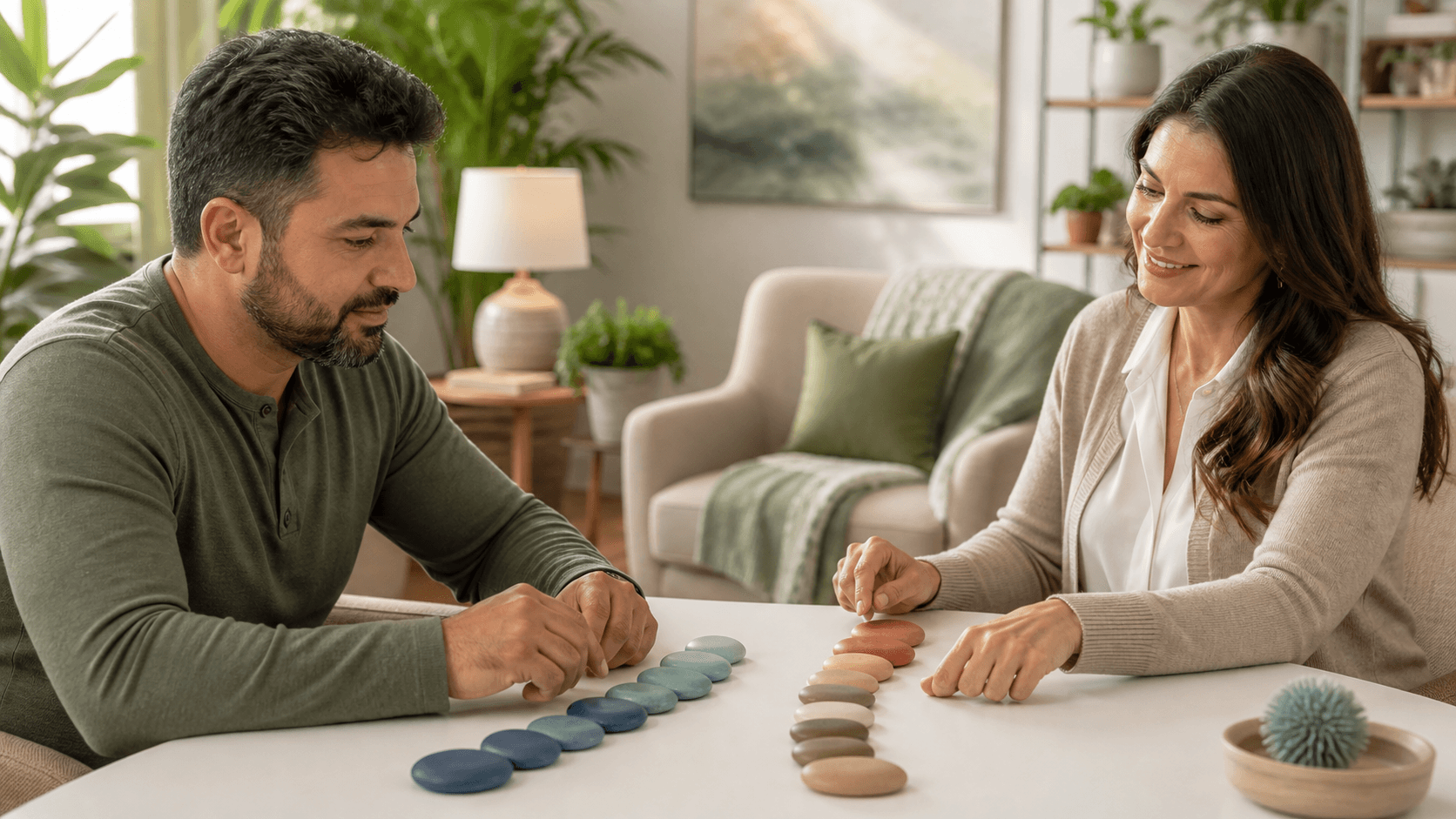
What to Expect From Dermatillomania Treatment
Dermatillomania, also called excoriation or skin picking disorder, is a mental health condition. It is not a sign of weakness, lack of willpower, or being "gross." It is a pattern that develops in the brain and body, and it can change with the right support.
Many adults think about getting help for a long time before they actually talk to a therapist. You might feel shame about the marks on your skin, worry that someone will not understand, or feel tired from trying to stop on your own. It takes real courage to even read about treatment, and that courage matters.
We want to walk through what dermatillomania treatment can look like in a clear, honest way. We will cover how therapists assess skin picking, common therapy approaches, what sessions may feel like, and what realistic progress often looks like. Effective treatment is a team effort. It is tailored to you and focused on both your emotional wellbeing and your day-to-day behavior.
Understanding Dermatillomania as a Treatable Condition
Dermatillomania can show up in many small moments during the day. You might notice urges to pick at:
- Bumps, scabs, or acne
- Dry skin around nails or cuticles
- Ingrown hairs or rough patches
- Spots on the face, scalp, arms, back, or legs
Sometimes the picking feels almost automatic, like your hands are moving before you fully notice. Other times it can be more ritual-like, with mirrors, tweezers, or long bathroom trips. Many adults spend a lot of time picking, then more time trying to cover marks with clothing, makeup, or certain hairstyles.
The physical impact can include scarring and discoloration, open wounds or repeated infections, and pain or sensitivity in picked areas. Emotionally, people often feel embarrassment, guilt, or self-criticism. Over time, dermatillomania can affect self-esteem and body image, social life, dating, and intimacy, and even work or school, especially if you avoid being seen.
It is important to know that dermatillomania is a body-focused repetitive behavior, or BFRB. It is tied to the brain's habit system and often to anxiety, tension, or a need for relief. It is not just a "bad habit you should stop." That kind of thinking usually adds more shame, which can actually make picking worse.
Dermatillomania often overlaps with other concerns, such as:
- General anxiety or chronic worry
- OCD and repetitive thoughts or rituals
- Perfectionism and harsh inner criticism
- Trauma histories
- Perinatal stress, pregnancy, or postpartum mood changes
Good dermatillomania treatment does not only look at your hands and your skin. It looks at you as a whole person, in your current season of life, including any physical, emotional, or family stress you are carrying.
The First Step: Assessment and Goal-Setting in Therapy
The first session, or assessment, is about understanding your story. Your therapist may ask about:
- Your medical history and any skin conditions
- Your mental health history and current symptoms
- When skin picking started and how it has changed
- How often you pick, for how long, and in which situations
- What you feel before, during, and after picking
- What you have already tried to help yourself stop or reduce it
Because shame is so common with dermatillomania, creating a nonjudgmental space is key. You are not expected to show your skin if that feels too hard at first. Many people begin by simply describing their routines and the areas they usually pick, such as the face, scalp, arms, back, chest, or cuticles.
In virtual therapy, like the care we offer to adults in California and Michigan, we can make flexible choices around the camera too. Some clients like camera-on for connection but may turn it off briefly if they need to talk about body areas that feel especially sensitive. Others prefer to keep the focus on words and feelings and slowly build comfort over time.
During these early sessions, you and your therapist set goals together. These might include:
- Reducing time spent picking
- Letting certain areas heal
- Feeling safer and more at home in your body
- Going to social events without intense anxiety about your skin
- Handling stress or strong emotions without turning to picking
Goals are not about perfection. They are about movement toward the life you want.
Therapeutic Tools Used in Dermatillomania Treatment
Dermatillomania treatment often pulls from several evidence-based approaches. Some of the most common include:
- Cognitive Behavioral Therapy (CBT)
- Habit Reversal Training (HRT)
- The Comprehensive Behavioral model, often called ComB
- Acceptance and Commitment Therapy (ACT)
These methods can blend together in a way that fits you. In practice, many clients work on core skills like tracking urges and triggers with simple logs or notes, noticing early signs that your hands are moving toward your skin, and using competing responses that make picking harder. Competing responses might include fidget tools, textured objects, or specific hand positions. Treatment may also focus on changing perfectionistic or shame-based thoughts into more balanced, compassionate ones.
Along with behavior tools, treatment often explores what is driving the picking. That might be anxiety about appearance or performance, obsessions or compulsions related to OCD, the pressure to "do everything right," especially at work or as a parent, big shifts in identity during pregnancy or postpartum, or past experiences that shaped the way you cope with stress.
Therapists may also bring in additional supports, depending on your needs and what best fits your situation:
- Exposure and response prevention, to help you face triggers without picking
- Mindfulness, to stay present with urges without acting on them
- Emotion regulation skills, to ride out waves of feeling without turning against your own body
Importantly, treatment is paced to your readiness. For some adults, especially during pregnancy, postpartum, or other high-stress times, the focus might first be on reducing harm, building safety, and lowering shame before working on bigger behavior changes.
What Ongoing Sessions and Progress Really Look Like
Ongoing therapy for dermatillomania usually happens weekly or every other week. Sessions often have a steady rhythm:
- Checking in on your week and your stress level
- Reviewing any tracking of picking episodes
- Noticing patterns in time of day, location, mood, or thoughts
- Celebrating small shifts, like one less picking "session" or stopping a bit sooner
- Adjusting tools if something is not helping yet
Progress with dermatillomania is often gradual and not perfectly straight. Many people notice changes like:
- Fewer picking episodes
- Shorter picking time once an episode starts
- Less intense urges
- Fewer tools needed in some settings
- More kindness toward themselves, even when they slip
Setbacks are not failures. They are information. Together with your therapist, you can look at what was happening in your life that week. Maybe sleep was off, work stress spiked, or a big life change stirred up old feelings. Then you make small, realistic tweaks to your environment, routines, or coping tools.
Virtual therapy can make this process easier to stick with. For busy adults in California and Michigan, the ability to attend from home, work, or even a parked car can help therapy fit into a packed schedule or a season of life with child care needs, health appointments, or changing routines.
Taking Your Next Step Toward Healing Your Skin and Mind
If you live with dermatillomania, you may have spent a long time trying to fix it by yourself, hiding marks and telling yourself to "just stop." It is worth asking: is that working for you, or is it wearing you down?
You do not have to figure this out alone. Small steps can open the door to change, such as:
- Gently tracking your picking for a week, without judging yourself
- Writing down questions you might want to ask a therapist about BFRBs
- Thinking about what you would hope to feel different about your skin, your body, or your daily life
At Azra A. Kim, LCSW, LMSW, we provide virtual therapy for adults in California and Michigan, with a focus on body-focused repetitive behaviors, anxiety, OCD, and perinatal mental health. Our approach to dermatillomania treatment is collaborative and respectful of your pace, your culture, and your current life circumstances.
Change is possible at any age. Working on dermatillomania is not just about your skin; it is about your relationship with yourself. When you invest in support, you are caring for both your emotional wellbeing and your long-term skin health, one step at a time.
Take A Compassionate Step Toward Lasting Skin-Picking Recovery
If you are feeling stuck in painful cycles of skin picking, you do not have to navigate this alone. At Azra A. Kim, LCSW, LMSW, we offer specialized dermatillomania treatment that respects your pace and your lived experience. We will work together to build practical tools, reduce shame, and support meaningful change in your daily life. When you are ready, you can contact us to schedule a consultation and explore what healing can look like for you.